
Service
Cedar is not concrete. It needs a different approach.
High pressure raises the grain, splinters board faces and leaves permanent wand marks in wood. We clean with the grain at low pressure.
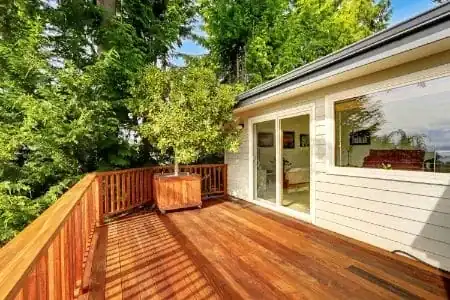
This is the damage we get called out to assess more than any other. Someone rents a machine, points it at a cedar fence, and ends up with a furred, fuzzy surface full of wand marks that can only be fixed by sanding every board. Wood and composite are far softer than concrete and they need to be treated that way.
What low pressure actually removes
Grey weathering, mildew, pollen film and the green cast that builds on the shaded side. The detergent does the lifting and the rinse is gentle. Cedar comes back to a warm honey colour rather than a scoured white.
If you're planning to re-stain
This is the prep step that determines whether your stain holds for four years or peels in eighteen months. Stain can’t penetrate through mildew and surface grey. A proper clean and full dry-out first is the difference, and we’ll tell you how long to wait before coating.
Composite decking
Composite doesn’t rot but it absolutely grows algae, particularly on shaded boards and anything near water. It cleans well at low pressure. High pressure permanently scars the embossed grain pattern — that damage cannot be sanded out.
Soft wash
500–800 PSI
Wood-safe detergent
Stain-prep ready
Common questions
Before you book
My fence has gone grey. Will it look new again?
Mostly. Cleaning removes surface grey and reveals the colour underneath. Wood that has been weathering untreated for many years may stay somewhat muted — a stain afterward brings it the rest of the way.
How long until I can stain it?
Usually 48 to 72 hours of dry weather. Staining damp wood traps moisture under the coating and it fails early.
More services
What else we clean
Get your free estimate today
Send a few photos and we’ll price it in writing. No site visit needed for most residential jobs.